Category: blog

  • Nature connection learning resource for schools and young people

    Nature connection learning resource for schools and young people

    Ever since the first wave of the coronavirus pandemic our relationship with nature has shifted. The woods, parks, rivers, lakes, coastlines on our doorsteps, that many of us took for granted, have now become our lifelines during lockdown. Going for walks outside was one of our top coping strategies and 45% of people reported being in green spaces had been vital for our mental health.  Wild swimming has increased massively and the words nature and mental health have been appearing together more and more.*

    At the same time we’ve also seen a surge in interest in Forest Schools and a focus on young people in nature. Nature connection is increasingly understood as an important part of a young person’s education and development.

    The wide-ranging benefits include:

    • Improved physical and mental health
    • Improved empathy for, and understanding of, ecosystems.
    • An improved sense of ‘eco-citizenship’.
    • Empowerment to take action – rather than despair in the face of contemporary challenges.

    However, for many teachers (as it is for learners) nature connection is new territory. So we’re pleased to share this new resource developed by Jasmine Dale, which aims to give teachers the confidence to plan and deliver nature connection sessions, with any group, of any age and ability, and through any part of the curriculum.

    It contains:
    ▪ ‘Flow learning’, around which any nature connection activity can be structured.
    ▪ Sample lesson plans, demonstrating how nature connection activities can be delivered in
    practice.
    ▪ A mapping of nature connection to the four purposes of the Curriculum for Wales.
    ▪ Links for further information and resources, for those wanting to find out more about nature
    connection.

    [pdf-embedder url=”http://reconnectinnature.org.uk/wp-content/uploads/2022/01/Nature-Connection_A-resource-for-Schools-and-Young-People.pdf” title=”Nature Connection_A resource for Schools and Young People”]

    Download here: http://reconnectinnature.org.uk/wp-content/uploads/2022/01/Nature-Connection_A-resource-for-Schools-and-Young-People.pdf

    [pdf-embedder url=”http://reconnectinnature.org.uk/wp-content/uploads/2022/01/Cysylltiad-a-Natur_Adnodd-ar-gyfer-Ysgolion-a-Phobl-Ifanc.pdf” title=”Cysylltiad a Natur_Adnodd ar gyfer Ysgolion a Phobl Ifanc”]

    Download here: http://reconnectinnature.org.uk/wp-content/uploads/2022/01/Cysylltiad-a-Natur_Adnodd-ar-gyfer-Ysgolion-a-Phobl-Ifanc.pdf

    This resource was developed by Jasmine Dale, as a Renew Wales ‘Innovation Initiative’.
    For more information, please contact info@renewwales.org.uk

    *NOTE: We recognise the inequality of access to green and blue spaces. So while spending time in nature may have increased for some, for others it may have got worse during the pandemic.

  • Join us for Nature Connection Experiences

    Join us for Nature Connection Experiences

    Reconnect in Nature is running another series of Nature Connection Experiences in Canaston/Minwear Woods near Narberth, Pembrokeshire.
    As a small group, we will move through a series of invitations to ground in the body and breath, open our senses and expand our nature awareness. This is a wonderful opportunity to slow down and experience some of the pathways to nature connectedness.
    • Deepen your relationship with nature
    • Experience the calm of embodied presence
    • Access the wellbeing benefits of being in nature

    Each session can accommodate a small group (following current safety guidelines) and will be guided by Nature Connection Leader/Ecotherapist Suzi Tarrant.

    The sessions run on the following dates:

    Saturday 15 th May from 1-3pm

    Saturday 29 th May from 11-1pm

    Saturday 5th June from 1-3pm

    Location: Canaston / Minwear Woods near Narberth.  We will provide the exact location once people have booked, as well as the outline of our Covid RA and guide.

    Cost: We are running this event on a pay as you feel donation basis:

    Minimum fee of 1-2 pounds

    Standard suggested fee of 10 pounds

    Sponsor fee of 15 pounds

    Book your place here and we will be in touch with you – https://www.eventbrite.co.uk/e/nature-connection-experiences-tickets-154095727469

  • My Journey of Understanding

    My Journey of Understanding

    By Jess Dando

    As preparations went underway for us to undertake the ‘Journey of understanding’, and some much needed exercise with great company, it started me thinking about the journey, what it meant to me and how much it still does.

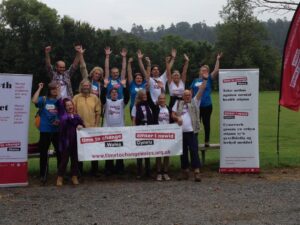
    The journey, in a nutshell was a walk in West Wales through all the counties on the 20th of September 2014, that aimed to bring together people with or without mental health problems to challenge the stigma around mental health. It was a wonderful idea, and it was a step in the right direction.

    Recently, when asked a question about mental health and stigma I began thinking again about my part in the journey, when someone asked me what I thought could be done to further challenge the stigma attached to mental illness, I couldn’t answer straight away and took long enough to consider what my thoughts were on it. A good few years later I have a better answer, so thought I would share it.

    Our modern society has become a lot more tolerant and accepting of mental illness over the last decade, but it would be naïve to suggest there is not still a large amount of work to be done in continuing to educate people about it, and to make sure that the stigma attached to mental health does not stop people who really need it, getting support. There are several reasons why I think mental health has the stigma still attached, whereas physical illness elicits a more sympathetic response. Firstly, the environment we live in is increasingly becoming one that rewards selfishness and lack of empathy rather than kindness, seeing it as weakness. Secondly, is lack of awareness and education, spurred on by misinformation and scare tactics from the mainstream media, used only to sell papers without a thought about the consequences. There are several more theories, but they are the most important to me.

    Before personally experiencing mental health difficulties myself, I am ashamed to admit that I found it hard to understand – despite trying my best to do so. Depression and anxiety, coupled with addiction have all sat on my shoulders for most of my life, every now and again weighing me down so that It was too heavy to carry, making me feel like life was too difficult to manoeuvre and manage, leaving me feeling hopeless and helpless, it would then result in me drinking alcohol to self-medicate and to make it feel less painful. After my own experiences with poor mental health, and coming so close to the edge of doing something I would never come back from and with the help of family, friends and the people at Reconnect in Nature, I developed a deeper understanding of the complexities associated with mental illness and experienced first-hand how hard it is to reach out for help, to tell people you are ‘broken’ (which I am most certainly not, and realise that now) Through my own experience of shame, I finally understood how frustrating and upsetting it is when people suffering are told to ‘snap out of it’ when they are depressed, or to ‘calm down’ when they feel anxious.

    My thoughts drifted towards how different my life would have been, if I had learned how to manage my depression earlier on in life, to be able to go back and fix the mistakes I made in the past, the moments lost forever through loss of memory due to using alcohol as a crutch. But I don’t think I would change anything, to suffer is to relate to others who are suffering, and if my life hadn’t been the way it has been then I wouldn’t be able to understand or connect and feel for others the way I do. It also wouldn’t have led me to discover what makes me content, and what I need to do when I feel depressed or anxious. I rediscovered my love for nature, connection with others and music and I realised how much these things mean for my stability, and recovery.

    The journey of understanding, for me, was an opportunity for us to connect, come together to understand mental health and to realise that the people who suffer are often the most wonderful; creative and kind souls who are fighting a battle every day that some will never comprehend. There is, no doubt a long way to go to educate people and dispel the myths perpetuated about mental illness.

    The Journey of understanding held so many lovely memories for me, the beauty of walking next to the river; looking out over green landscapes; and connecting with other people, supporting each other by carrying bags that others found to heavy, or sharing a story about our lives – to learning about habitats and foraging on our walks. That journey brought me closer to my own journey, to understanding my own path, and to empathise with others.

    We are on the precipice of facing a mental health crisis, post COVID-19 and we will all need to come together as communities and support one another, to find better and more comprehensive ways of helping those who need it.  I want to say thank you to the facilitators, and the owners of Reconnect, firstly Andrew Dugmore, an incredibly inspiring person who has lived experience with mental health, helping many other people with a wealth of information on pretty much anything to do with West Wales and the history of all four counties.  On his wonderful walks he shares his knowledge of foraging, mindfulness, building fires and shelters, and generally supports people who are struggling by facilitating nature connections and bringing people together to combat isolation and loneliness. And Mike Erskine, who was responsible for all the digital media, wonderful photographs and videos, and helping others find their love of photography, as well as supporting them in the way Mike does, to connect with nature and others, and ultimately themselves.

    Since the journey, reconnect has grown significantly, and I am proud to say that I now volunteer alongside them, inspired by their wealth of knowledge and the mission of the organisation to help those who need support, to connect with nature; themselves; and one another. Suzi Tarrant has now joined the team, a highly qualified mental health professional with a wealth of information about the natural world and mental health. I am really looking forward to creating some videos over the next 12 months that will offer a closer look at the organisation, and the work they do, and will enable a more in depth look at the people behind the organisation, and tell their stories.

    My final thoughts: Stigma and ignorance are sometimes incredibly hard to defeat. Together, we need to fight for early intervention and support our friends and family when they need us, as well as practice self-care for ourselves, to enable us to be strong enough to support others. I have always had a problem with that last one, learning to love myself is a journey, with many winding roads. It isn’t easy to tell a story or a truth that you have hidden from for too long, but I am still on my journey, and by finding my own way through rivers and woodlands; making music that allows me to tell my story and recognising and acknowledging when I am struggling and asking for help, the roads are clearer and the road is less bumpy.

    Watch the Journey of Understanding video

    https://www.youtube.com/watch?v=Ri-6C3uXQGE

    For more information, or if you/family/friends would like more information about our organisation then please do contact us via email, or add us on Facebook @reconnectcic; Instagram; ReconnectCIC or Twitter: @recnnectcic

    connect@reconnectinature.org.uk

  • Reconnect in nature celebrates 10 years

    Reconnect in nature celebrates 10 years

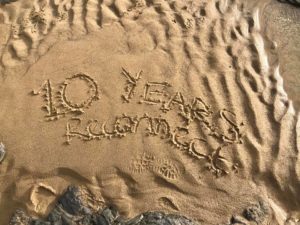
    Reconnect in nature has now been running for 10 years. It started as walking group first called Walking with Friends, which led us to realise how important connecting to nature and other people was for our mental wellbeing. From these origins we are now delivering training, workshops and taster sessions on nature connection to help spread what we have learnt and share the benefits of nature on our health.

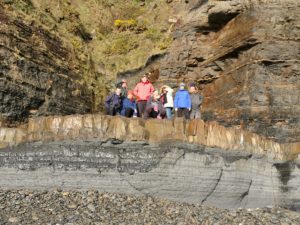
    For our 10th anniversary we celebrated by getting back to our roots and enjoying group walk on the coast and woods near Colby

    Here’s to the next 10 years.

  • Trees and Wellbeing Conference. Reflections from our visit to Oxford Brookes University.

    Last week we attended the Trees and Wellbeing Conference at Oxford Brookes University that brought together researchers and practitioners to discuss how, and why, trees, forests and woodland can make us all feel better.

    Here’s what we took we away from our two day trip:

    1. There are a lot of good things happening across the UK when it comes to nature based intervention for health and wellbeing.

    • Projects in Cornwall (A Dose of Nature) show that even small amount of time in nature over a 12 week period has a 69% increase in wellbeing.
    • Westonbirt Arboretum, who have a community project very similar to our own, use their woodland to provide a safe space for people to take part in hands-on day visits and practical conservation activities.
    • NHS Forest work with the NHS to improve the health and wellbeing of staff, patients and communities through increasing access to green space.
    • Cities Alive by Arup is rethinking how we should design and manage cities in the future particularly thinking about green spaces.
    • Trees for Cities,who work in urban spaces working on tree planting projects and and Edible Playgrounds.
    • The Sylva Foundation – who connect people to woodlands and enable them to grow and manage their own trees. They also inspired us to do more wood working.
    • We also like the sound of a proposed county wide nature-on-referral service in Cornwall where patients will be encouraged to join groups that involve walking in natural places, and other nature-based activities to improve their health and wellbeing.


    2. The evidence of nature’s impact on our wellbeing is easy to find.

    There is a whole list of studies and research here and here, and the Valuing Nature Health and Wellbeing programme has some really interesting current studies taking place across the UK. One of the early piece of published research comes from 1938 called, Convalescence on the coast, exploring the idea that sending people to beautiful places helps recovery.


    3. Our childhood experience of nature matters.

    We know that the experiences we have as children have an important impact on our lives. Talks by Sally York, Education Policy Advisor, at Forestry Commission Scotland and Liz O’Brien of Forest Research, both mentioned how outdoor learning and connection to nature as children has a lasting effect on our lives. We have seen recently through the work of Robert Macfarlane and his book The Lost Words that words such as Dandelion, Otter, Bramble and Acorn are being removed from childrens language and with it as Sally York said “the insidious creeping loss of experience”. Connecting children to nature is as vital as ever and the work of people like Stephen Kellert on the stages of progression and connection are really insightful.

    4. Trees, woodlands, and nature have huge social and cultural importance.

    “I sincerely love & worship trees & know that they are people & wonderfully beautiful people.”

    Paul Nash

    The other side of this conference was about how trees are intertwined with us and our history as a species. Poets such as WH Auden, Edward Thomas, Mary Oliver, and John Clare and artists like Mark Gertler and Paul Nash, all show how nature shapes our minds, our creativity and our world.

    “The trees encountered on a country stroll
    Reveal a lot about a country’s soul.”

    WH Auden

    This more emotive and poetic side of the conference prompted discussions around what we mean by evidence based decision making and does poetry and art count as evidence? Our connection runs deeper than numbers and statistics so perhaps there should less empahsis on normal data we come to see as evidence.

    What we took away with us above all, is that bringing together a wide range of people from different organisations and places can build shared understandings of the value of trees and nature. It feels like there is a direction and common value around trees and woodlands and there is room for more of this exploration. We know we’d like to build our own gathering and conference in Wales in the future.


    Other resources we came across are…

    The Tree Charter which sets out the principles for a society in which people and trees can stand stronger together.

    A manifesto for the green mind: a call for a revolution to bring nature into our lives by Jules Pretty.

    myForest Directory, helps to connect you with others in the forestry and woodland sector.

    How to Hygge a Tree, a resource that inspires organisations to work with communities in woodlands.